


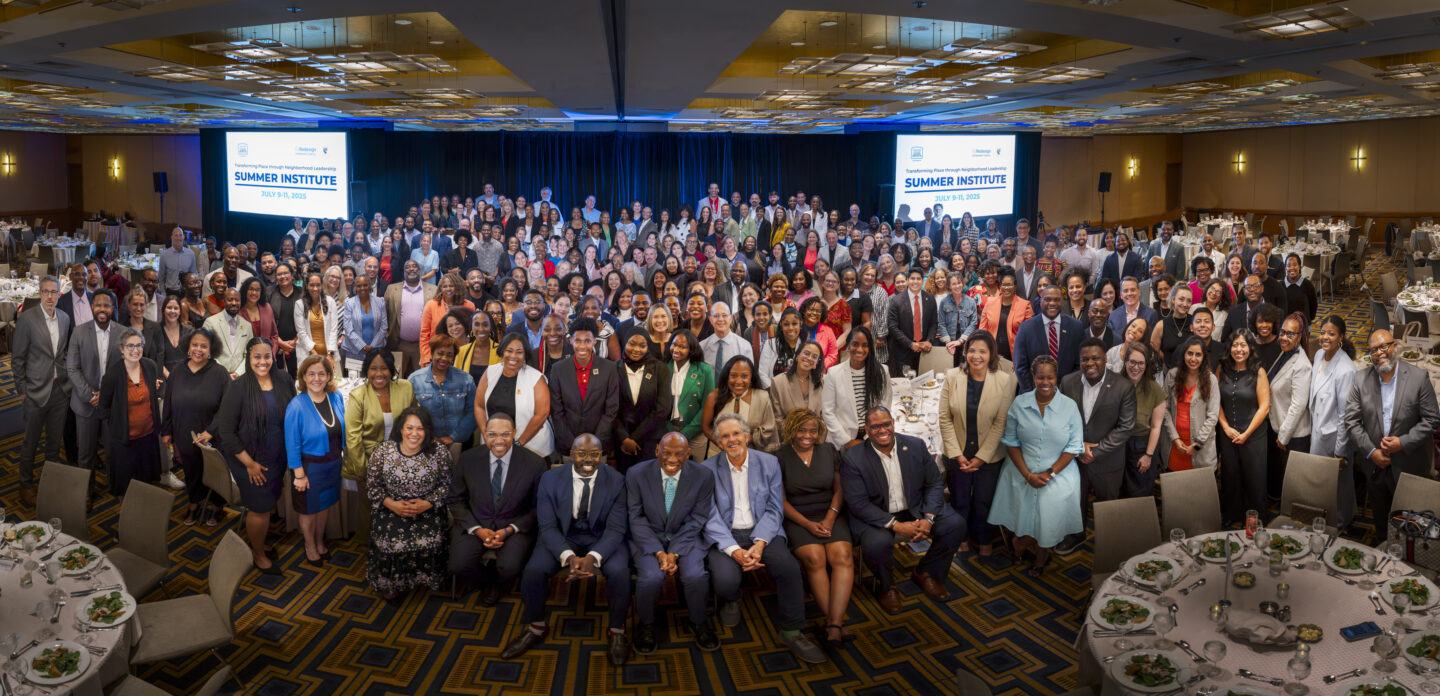
Taking the stage before a packed audience at Summer Institute: Transforming Place Through Neighborhood Leadership at Harvard University, Kwame Owusu-Kesse — CEO of Harlem Children’s Zone (HCZ) and Co-Founder of William Julius Wilson Institute (WJWI) at HCZ — called on leaders to reimagine what “cradle to career” truly means. More than just a pipeline of programs, it is “a promise to walk alongside every child, at every step of their development journey, ensuring they have access to the high-quality supports they need to thrive,” Mr. Owusu-Kesse said.
Now in its fourth year, Summer Institute was an important moment for Mr. Owusu-Kesse and the national cradle-to-career movement he has led — one that’s rooted in place, powered by data, and committed to innovation and scale.
“If you’ve ever had the privilege of caring for a young person, ask yourself: what would you do for your own child?” Mr. Owusu-Kesse added. “That’s the standard we must set for every child in America.”
Co-hosted by WJWI and EdRedesign Lab at Harvard Graduate School of Education, Summer Institute brought together hundreds of cross-sector leaders — representing 103 neighborhood organizations and 13 city governments from 84 cities in 31 states — for inspirational keynotes, idea sharing, community building, and peer-led problem-solving to accelerate solutions for children and families.
The event made one thing clear: delivering on the standard Mr. Owusu-Kesse set takes cross-sector collaboration, enduring leadership, and an unshakable belief in the power of cradle-to-career strategies to create social and economic mobility for children across the country.
Keep reading to explore more of the impactful moments that defined Summer Institute 2025.
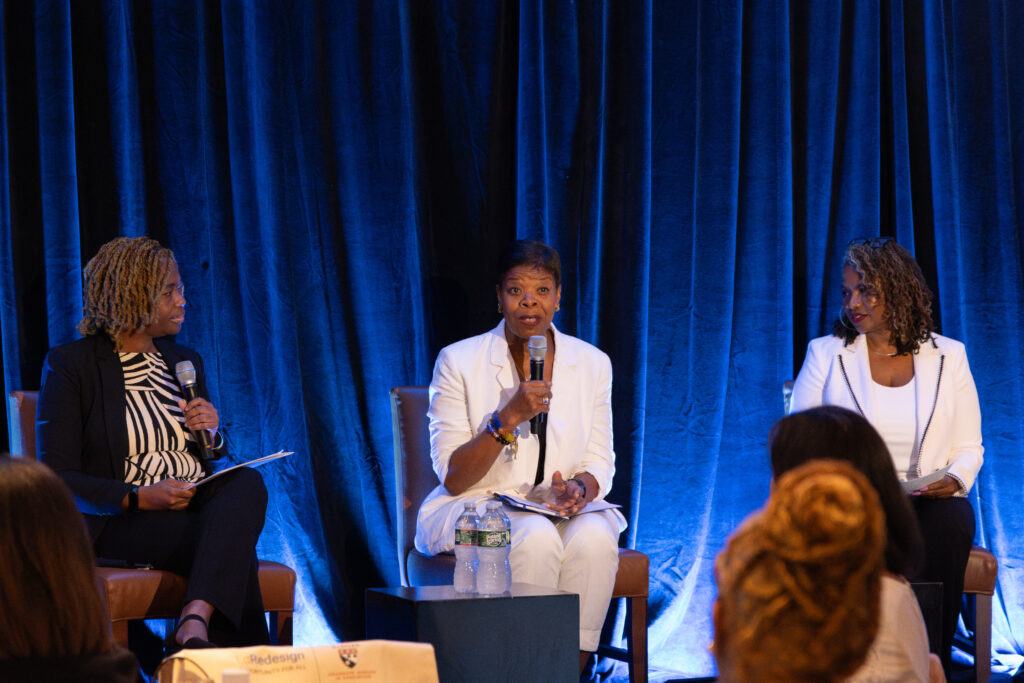
Day one of Summer Institute spotlighted one of the most significant recent wins for the place-based field: the passage of the ENOUGH Act — Maryland’s first-in-the-nation, statewide strategy to end concentrated child poverty in its most under-resourced communities.
In the panel discussion, “The ENOUGH Act Journey: Bridging Policy and Practice,” a cross-sector group of state officials, nonprofit leaders, and WJWI policy experts traced the evolution of this landmark legislation. With the full backing of the state, the act empowers 27 grantee organizations to implement hyper-local interventions in neighborhoods most impacted by poverty, providing the resources needed to identify and address root causes at the community level.
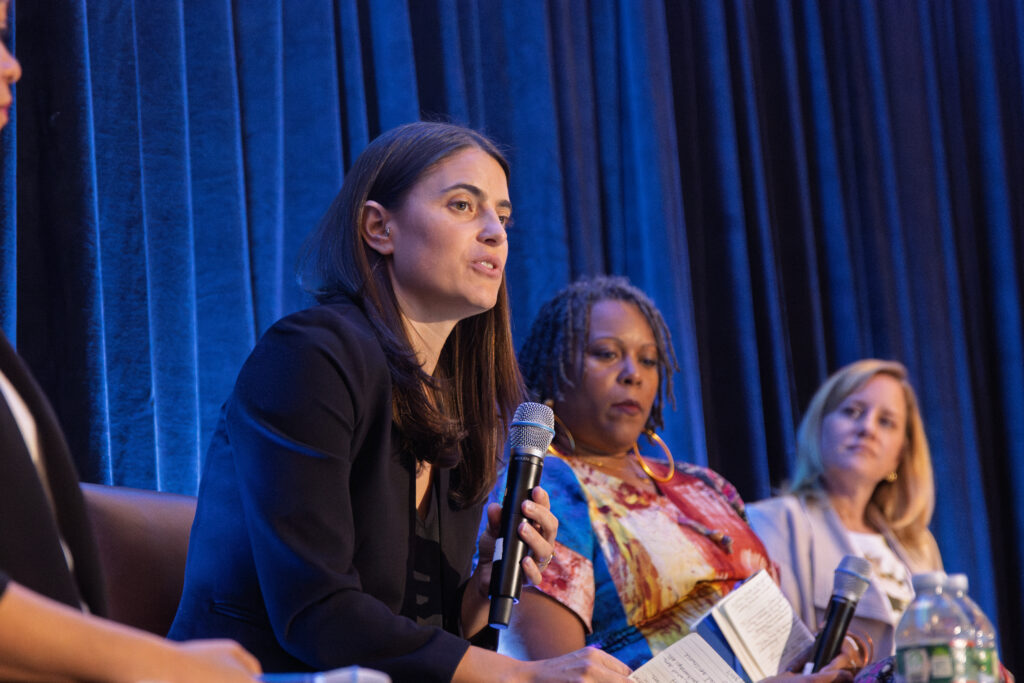
“This is policy grounded in practice,” Christian Rhodes, Chief National Impact Officer at HCZ, said. “The ENOUGH Act is what happens when we treat community-based organizations not as contractors, but as partners in solving poverty.”
WJWI played a catalytic role in influencing the passage of the ENOUGH Act. As a strategic advisor to Gov. Wes Moore and the Governor’s Office for Children, WJWI provided place-based expertise and supported grantee capacity-building. Today, WJWI continues to support the ENOUGH Act’s implementation through technical assistance, peer learning opportunities, and policy guidance to ensure its success and sustainability.
Read more about WJWI’s support for the ENOUGH Act and hear from Gov. Wes Moore>
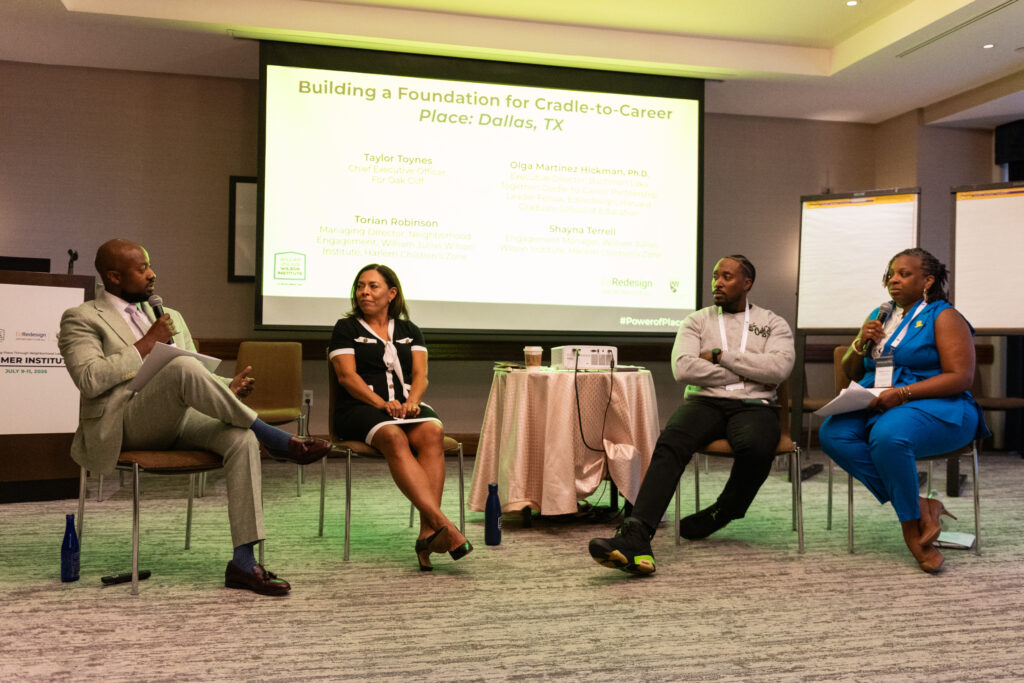
Breakout Sessions: Strengthening Practice
Summer Institute also featured a lineup of breakout sessions designed to help place-based leaders tackle today’s most urgent challenges and scale what works for children and families:
- Cultivating Financial Resilience: Leaders from 20 Degrees shared practical tools to help community organizations build long-term financial sustainability.
- Resilience in Action: HCZ program leads discussed how to design programming that reflects the needs, strengths, and aspirations of children and families.
- Public Sector Innovation: In a session led by Harvard Kennedy School’s Dr. Jorrit de Jong, mayors and senior officials from the Mayors’ Neighborhood Academy: One Million Points of Opportunity explored how to lead systems-level change and align city services around cradle-to-career outcomes.
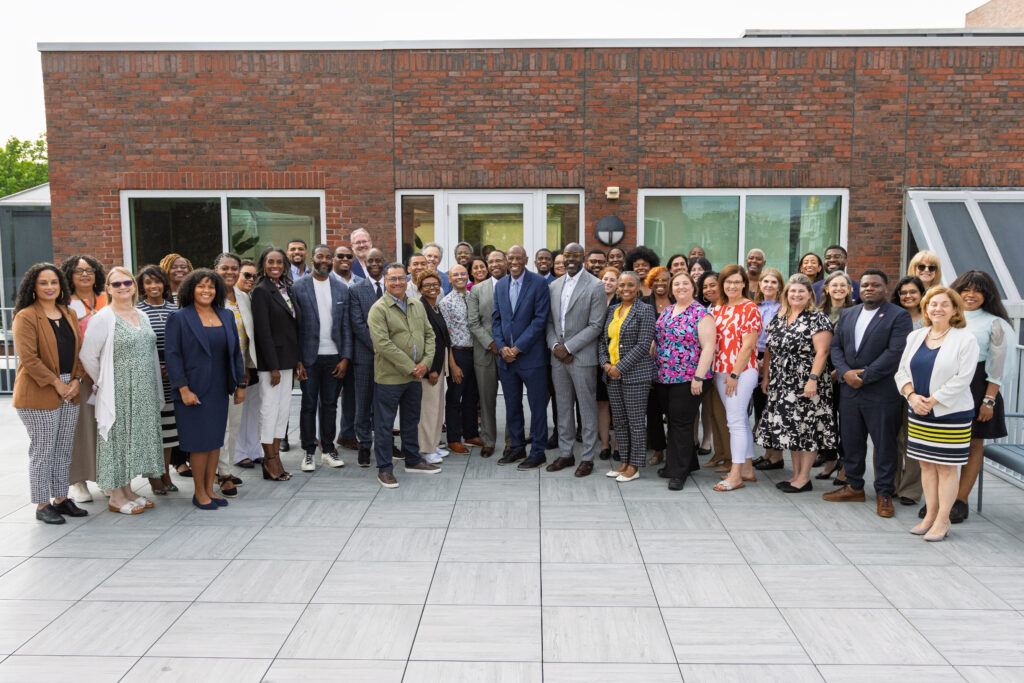
The Mayors’ Neighborhood Academy — a WJWI initiative launched in partnership with the National League of Cities — supports a cohort of 15 mayors and senior city officials from across the U.S., representing more than 3.5 million Americans and over 700,000 youth. As part of the Summer Institute public-sector track, the Academy fellows built on lessons from their initial site visit to Harlem in February and deepened their work to adapt and apply elements of HCZ’s nationally recognized, comprehensive, cradle-to-career model in their cities.

The Power of the Pipeline
Mr. Owusu-Kesse and Dr. Saskia Brown, Superintendent of HCZ Promise Academy Charter Schools and Early Childhood Programs, amplified the importance of the cradle-to-career ecosystem in their discussion, “The Power of the Pipeline.”
Mr. Owusu-Kesse spoke to the power of the cradle-to-career pipeline — not just as a collection of programs, but as a seamless journey that supports a young person through every life stage.
“We’re weaving together a network so tight that no one falls through the cracks,” he said.
Dr. Brown underscored that schools can’t do this work alone. Young people must be embedded in an ecosystem of wraparound supports.
“That’s how we’ve closed the achievement gap and surpassed pre-pandemic performance,” she said. “We joined this army to help every child, and we don’t take that responsibility lightly.”
Leadership, Legacy, and Local Change
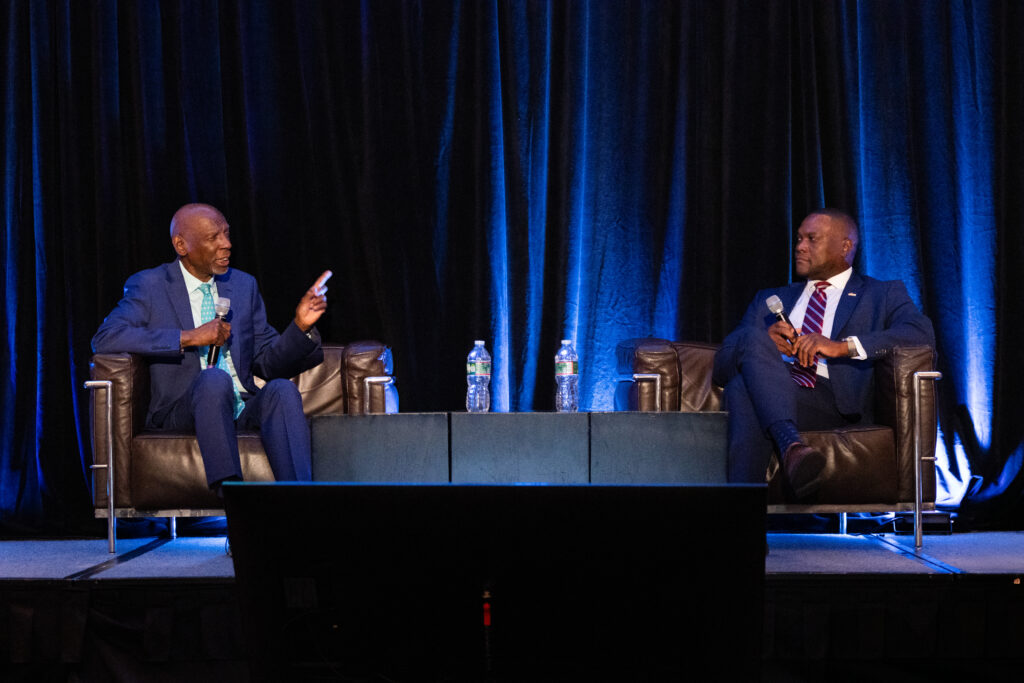
Geoffrey Canada — Founder and President of HCZ, and Founder of WJWI at HCZ — sat down with Mayor Monroe Nichols, the first African American Mayor of Tulsa, Oklahoma, for a powerful conversation on the meaning of legacy and what it takes to lead change at the local level.
“If a great change is going to happen in outcomes for our children, it’s going to start in neighborhoods and cities and ladder its way up to the national level,” Mayor Nichols, who is also a fellow of WJWI’s Mayors’ Neighborhood Academy, said.
Mr. Canada reflected on a pivotal moment in his early leadership and the impetus for founding HCZ: a young girl in Harlem was struck by a stray bullet while eating breakfast in her home, a tragedy that was far too common.
“When moments like that happen, we don’t turn away. We run toward them,” he said. “That’s what leadership looks like. You show up. You take responsibility. And you do everything in your power to protect and uplift the children in your community.”
Mayor Nichols echoed the urgency, emphasizing that mayors must take seriously what’s often left out of their job descriptions: improving outcomes for children and families.
“Being a mayor isn’t just about roads and policing,” he said. “It’s about kids and families. It’s about hope.”
Together, they offered a vision of leadership rooted in love, courage, and accountability — one that continues to drive HCZ’s work and inspire leaders across the country to rise to the challenge.

“Will the Field Grow Up?”
In the closing keynote of Summer Institute, Mr. Rhodes issued a challenge to the field: move beyond “decks and frameworks” and stay focused on what matters most: fulfilling our promise to help children succeed.
He shared the story of Pedro. The middle school student, who lives in a community with whom WJWI works, was sustained by a school-based support system that offered mental health and medical services, a food pantry, and a team that knew him by name. But the support could end after eighth grade.
“Cradle-to-career only works if we do the whole thing,” Mr. Rhodes said. “Too many of our systems haven’t grown up, and some of our programs haven’t either. We’ve spent four years building this movement at Summer Institute. Now the question is, will our field grow up?”
He closed with a call for accountability in outcomes for children and families.
“When we visit your communities, don’t just show us the programs,” he said. “Show us the children. If you’re serious about this work, WJWI will be serious with you.”
Mr. Rhodes’ words resonated throughout the room, underscoring a key takeaway of Summer Institute: real change begins and ends with putting our children first and having the courage to build systems that empower them to realize their potential.