


By Kwame Owusu-Kesse, CEO, Harlem Children’s Zone
Editors Note: an edited version of this piece appeared in Crain’s New York Business. The following is the unabridged version.
I often reflect on my own story: a childhood marked by instability, poverty, and toxic stress. A small stroke of luck, my mother playing bingo at a local elementary school run by nuns, facilitated my acceptance and scholarship to a Catholic school we otherwise could not have afforded. That foundation of strong academics, enrichment, exposures, and healthy relationships put me on a path that eventually led to Harvard University, a career on Wall Street, and today, my role leading Harlem Children’s Zone (HCZ). It’s a story that could only be told in America.
With stories like mine — like those of many of our scholars here in the Zone — we see the evidence that the American Dream still works. In truth, some argue it is evidence of how rarely it does; luck should not determine a child’s future.
The idea that education alone delivers economic mobility is one of America’s most expensive myths. Young people’s outcomes are shaped by a constellation of factors, what we at HCZ refer to as the Social Determinants of Thriving. Access to stable housing, healthcare, food, transportation, and social capital can be just as consequential as classroom instruction. Addressing any one of these in isolation may offer temporary relief, but only coordinated action across all of them can provide escape velocity from intergenerational poverty.
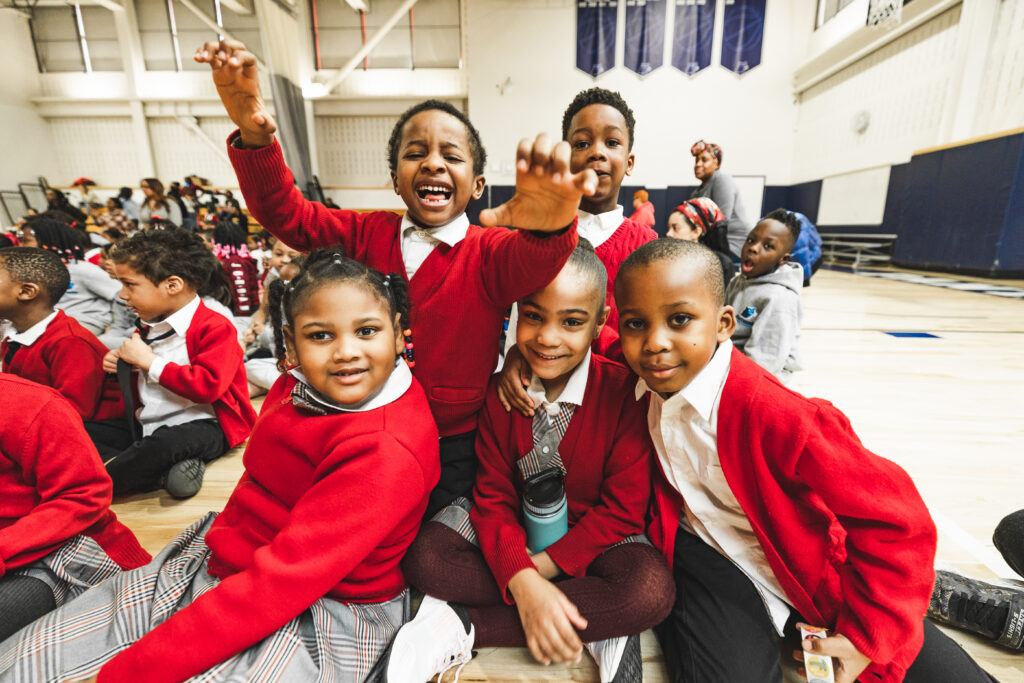
That understanding is foundational to HCZ’s cradle-to-career model, a tightly woven ecosystem of support designed so that no child can fall through its seams. Over the past several years, our National Impact team has supported this approach in more than 55 communities across the country, urban and rural alike, serving as proof that comprehensive, place-based strategies can improve neighborhood outcomes.
Yet, even when young people succeed academically and enter the workforce, many remain one emergency away from financial collapse. This is not a failure of effort or discipline. It is a systemic failure to provide access to wealth-building opportunities.
Research from Harvard economist Raj Chetty shows a dramatic decline in absolute mobility. While 92 percent of children born in the 1940s earned more than their parents, that figure has fallen to roughly 50 percent for those, like me, born in the 1980s. The outlook for today’s children is even worse. Nearly one-third of Americans live below 200 percent of the poverty line, and the economic shocks of recent years have only deepened vulnerability. The wealth gap now costs the United States economy $300 billion+ annually in lost productivity and growth. Meanwhile, baby boomers are driving the largest intergenerational transfer of wealth in American history, where low-income families will be largely excluded.
Five years ago, to address this reality, HCZ launched Wealth Builds, an economic mobility initiative that pairs comprehensive cradle-to-career services with financial education and direct capital investments including seeded college savings accounts, scholarships, and an allocation to our youth opportunity investment fund. Now expanded to Minneapolis, Atlanta, and Oakland, the initial lessons are clear. Financial education without financial assets is insufficient. Young people need real capital to participate meaningfully in the market economy, applying what they learn towards building long-term wealth.
Through Wealth Builds, HCZ has codified a scalable national framework—Universal Economic Mobility (UEM)—where every child, regardless of zip code, should have access to early and sustained capital, developmentally appropriate and culturally relevant financial education and experiences, and high-quality cradle-to-career systems of support.
This is why recent momentum around Trump accounts, also known as 530A accounts, holds significance. The mobilization of billions of dollars in seed capital, coupled with an efficient investment infrastructure, offers a rare opportunity to reach children on a national scale from birth. Importantly, child asset building has bipartisan support. However, Chetty’s research also suggests that left to chance, too many children will never access these mobility opportunities for circumstances beyond their own control. There must be targeted interventions that connect underserved Americans with the same wealth-building opportunities as those who are more economically mobile. To truly ensure these investments are optimized, the nation must adopt the Wealth Builds UEM framework.
530A accounts must be integrated into a broader child capital stack that includes 529 plans, baby bonds, scholarships, and other long-term assets. These investments must be paired with quality financial instruction and trusted delivery systems and networks that ensure families can actually use them.
Closing the wealth gap is not a vague aspiration. It is a shared responsibility and a practical economic imperative. Policymakers, corporations, and philanthropists must aggregate capital to make catalytic, early investments in children and build the public infrastructure that makes those investments accessible. Place-based partnerships, working through schools, community institutions, and trusted local networks, must ensure families can find, activate, and steward these assets over time, supported by meaningful financial education and experience. And once barriers to access are removed, families and communities must engage, because opportunity only matters if it is seized.
As America approaches its 250th anniversary, we have an opportunity to collectively build systems that give everyone access to America’s promise. We can invest early and consistently in our children, compounding returns not just in markets, but across generations. This will not only secure our economic future, but also ensure millions of young people can build thriving lives.
Sign up to learn more: